To me, these days, the annual Buxton International (really?!) Festival is a bit like Christmas; it’s either a long way off or tomorrow!
This annual event has run with only one interruption in 2020, and a partial curtailment the following year due to the Pandemic. From year 1 in 1979, Buxton Festival has been highly impressive and innovative offering a more than two week programme not only of rarely performed opera, but also, an impressive selection of concerts, recitals, talks and other events to appeal to as wider public as possible, as well as generating interest for young people who would enjoy the opportunity to take part in a repertoire suitable and appealing for children. There are even guided walks to different parts of the town. During the life of the current Buxton Festival (there have been others), the magnificent 1903 Opera House has been refurbished twice, and today, it still impresses just like it must have done 120 years ago.
My interest and eventual involvement with Buxton Festival was prompted by a sudden desire to create an archive of Festival memorabilia, inspired by having seen some early (1979) ephemera in Buxton Museum, on my way home from work, sometime in the very early 1990s. I called at the Festival Office, in those days on Hall Bank, enquiring into the possibility of obtaining leaflets from 1979 to the then present day. I knew nobody in the office at that time, but one person there did see a fund raising opportunity and sold me all of the programme books available, except for 1979 and 1988, the 10th Buxton Festival, at £5 per copy! In those two years, all the programme books had been sold during the Festival period. Peak Press in Chapel-en-le-Frith, who had produced most of the programme books, would furnish me with a 1988 copy, which I didn’t have to pay for! I eventually managed to obtain a 1979 programme book. At a Buxton Festival bric-a-bac fundraising event, I was approached by a volunteer to become one myself in 1992 (I think). Thus started a major period of my life, which I had to reluctantly relinquish in 2017 after open heart surgery, which took far too long to recover from.
While health issues influenced my decision to step down from being a member of the Friends Committee, I did hang on to my association with the Buxton Festival “by a thread” continuing my support as a Patron.
On Monday this week, I was informed that tickets had been reserved for me for two events at the Opera House, which had been sold out almost since bookings opened several months ago. Although I had not intended venturing into town, there was nothing really to prevent me from changing into some half decent attire and joining the waiting throngs outside the Opera House for a one-off concert featuring the violinist Nicola Benedetti and eleven piece English Concert. My ticket was, to begin with, at the back of the Stalls behind a support pillar obscuring my view of the performers on stage. Unexpectedly, those seated to my left all moved one seat to their left, leaving me the opportunity for an uninterrupted view of the stage. I was always lucky! For just over an hour, violinist Nicola Benedetti, accompanied by the eleven-piece (if I counted correctly), English Concert performed music from the likes of Antonio Vivaldi (1678 – 1741), Arcangelo Corelli (1653 – 1713) opening with one work (based on a familiar work of Corelli) by Francesco Geminiali (1687 – 1762). I am not surprised this rare concert was sold out almost immediately when the tickets went on sale.
There were two sell-out concerts on Monday, both generously sponsored by George and Daphne Burnett in celebration of their Golden Wedding.
I was extremely fortunate to acquire a returned ticket for the almost late night performance by trumpeter Wynton Marsalis with his five-piece jazz ensemble, all beyond the top of their game. I was able to upgrade my back-row-of-the-stalls seat to one, four rows from the front, from where I took the pictures below in this blog. I didn’t even have to close my eyes to be transported back to four very happy and exciting days I spent in New Orleans last summer when I forgot that I was in my early seventies! The two concerts that day, although vastly different, had two things in common. Both were sold out very quickly, and every musician was at the very height of their game. And from what I gather (I may be wrong), many in the audience had been to both performances and enjoyed each as much as I did.
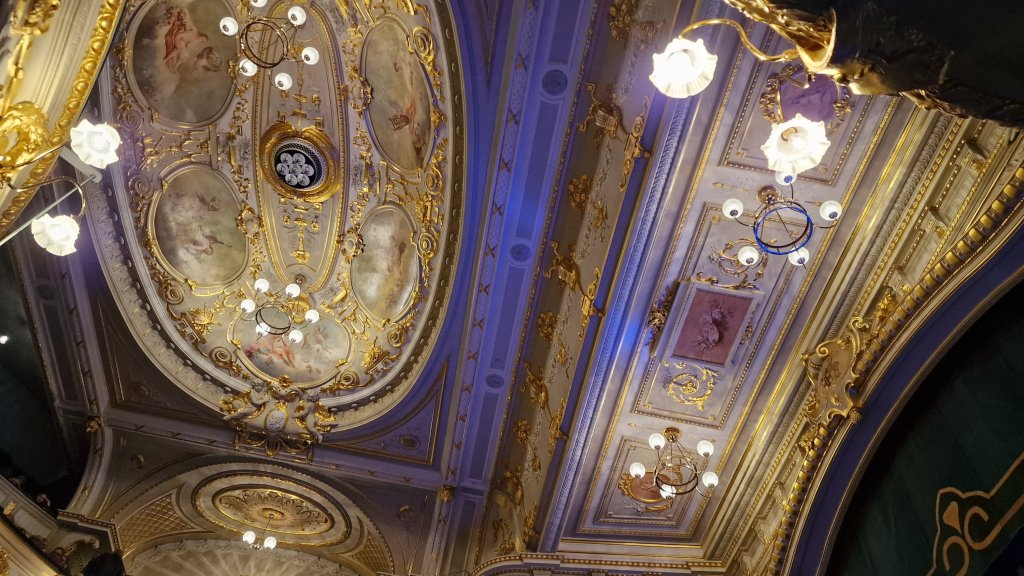
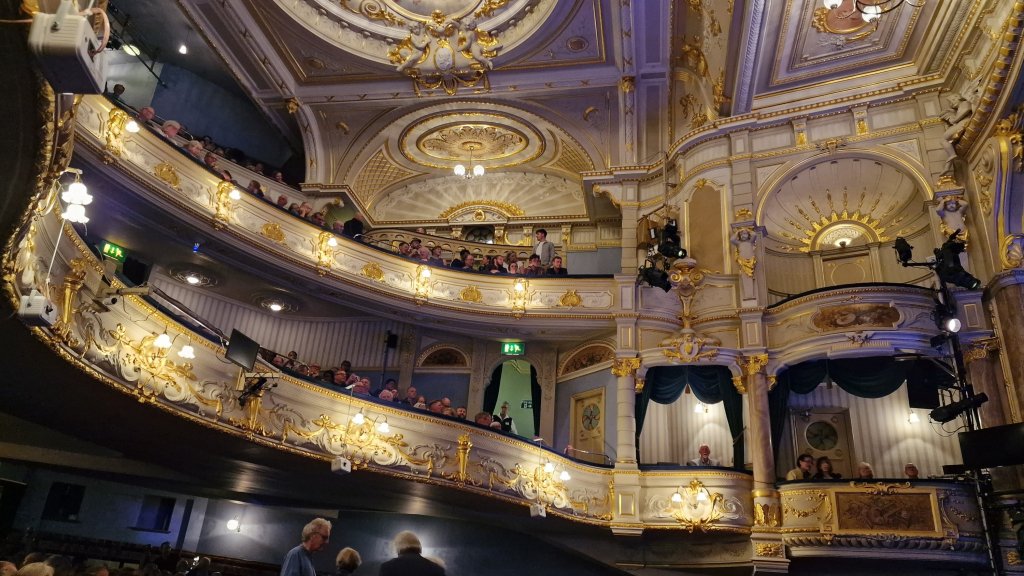

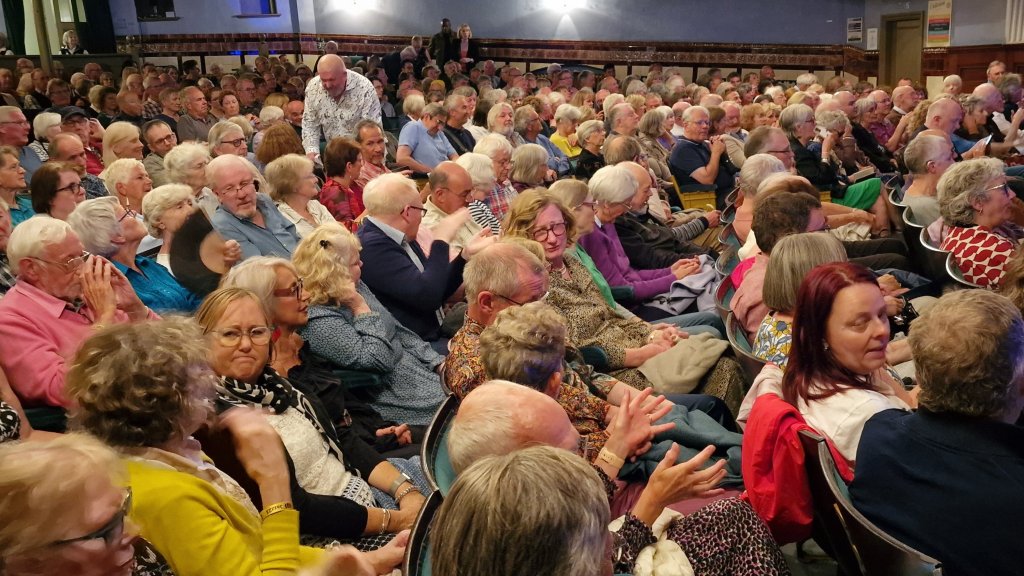
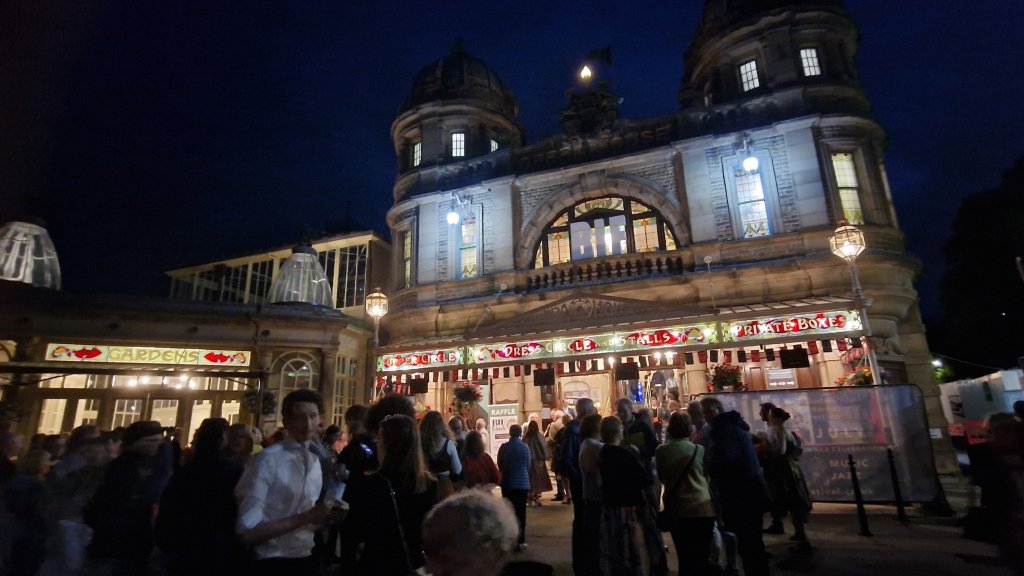
Again, sold out, the literary interview between Ian Muir-Cochrane and International Editor of the B.B.C. Jeremy Bowen filled the Opera House to the rafters. I was fortunate to find a member of the public with a spare ticket for sale, whose wife had some kind of unexpected commitment to attend. I apologise for not taking pictures, but an appropriate opportunity did not arise! I was reminded of the extremely tough and dangerous occupation of a foreign journalist/correspondent and the traumas that will always have a lasting effect. A first-hand impression of what is happening in the Middle East, and its likely future is not very encouraging and rather sobering. I felt that the entire audience was in great appreciation of his coming to the Buxton Festival.
On Thursday, I tried my luck for The King’s Singers, yet another sold-out event. Being at the Octagon, Pavilion Gardens, there was always the chance of being squeezed in at the last minute.
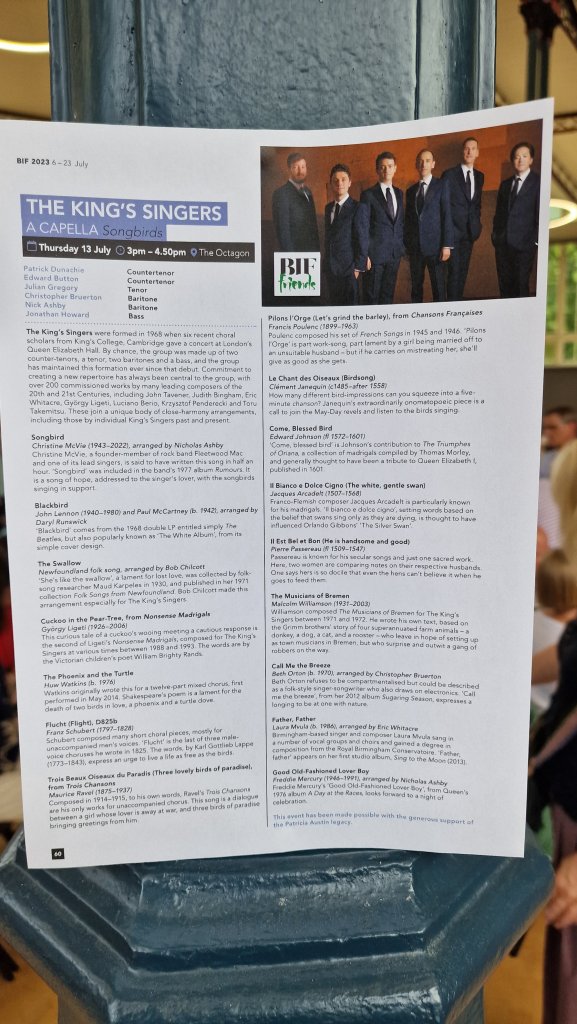
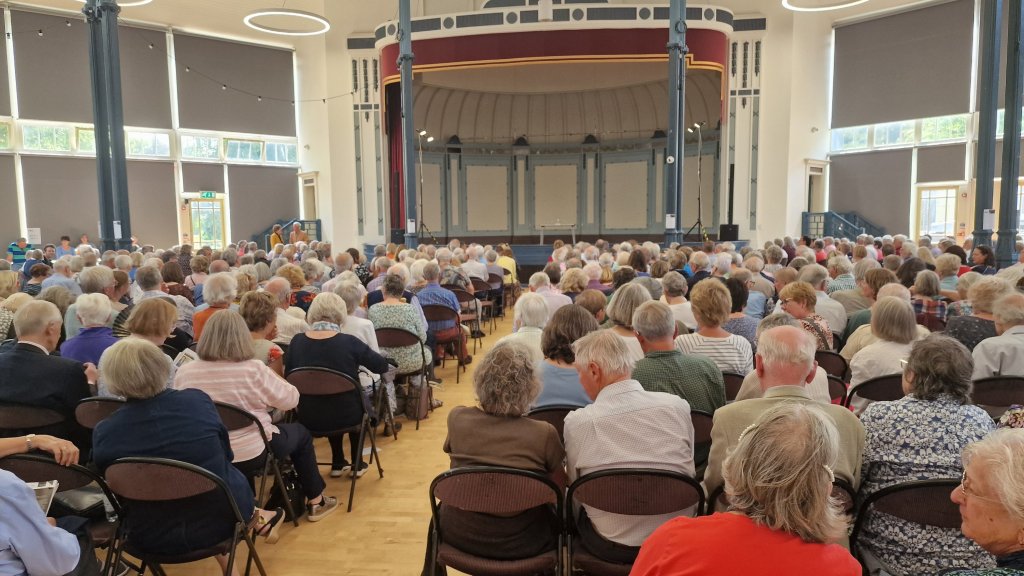
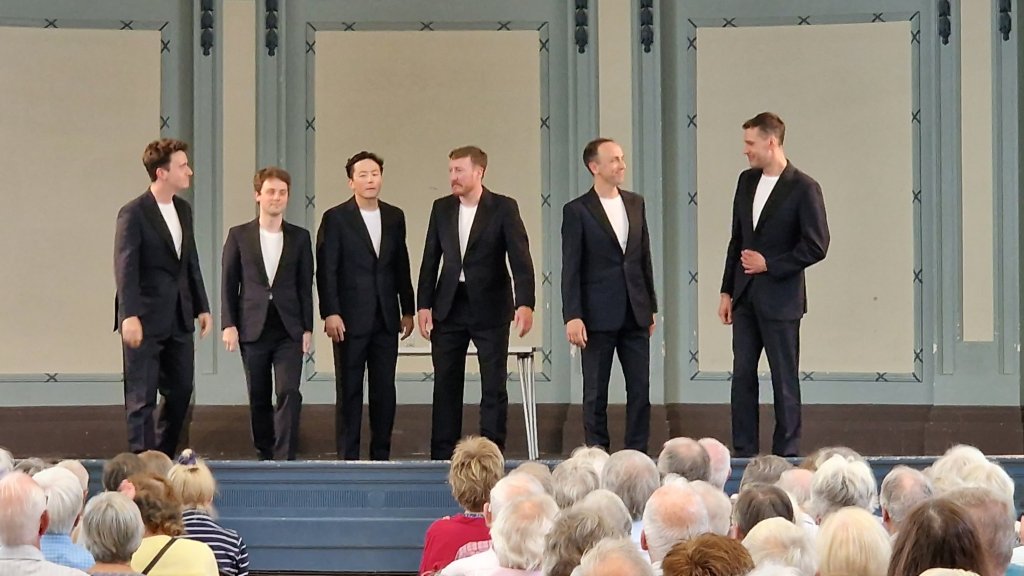
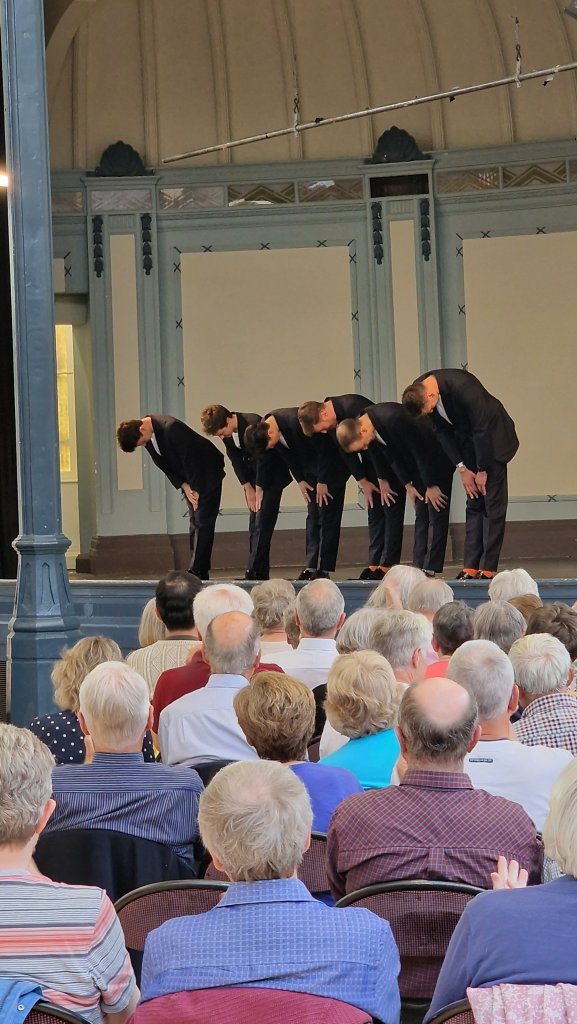
The King’s Singers were established in 1968 when six recent choral scholars from King’s College Cambridge gave a concert at Queen Elizabeth Hall. The ensemble consisted of two counter-tenors, one tenor, two baritones, and one bass. This remains the case today, although obviously with a younger line-up. A varied repertoire is offered and performed to “beyond perfection,” and it’s no wonder tickets for this were “like gold dust.”
I would like to think that the original King’s Singers might still be around to be rather delighted, knowing that which they established back in 1968 continues to thrive and will soon be touring parts of Europe.
Finally, this week, as southern Europe fries in unprecedented high temperatures, and the U.K. is blessed with the privilege of a climate reminiscent of a lousy day in Spring, I chose, on impulse, to go along to my church in the evening where the 1925 silent movie Phantom of the Opera was screened, the accompanying organ continuo produced sounds I had never heard that organ produced ever.
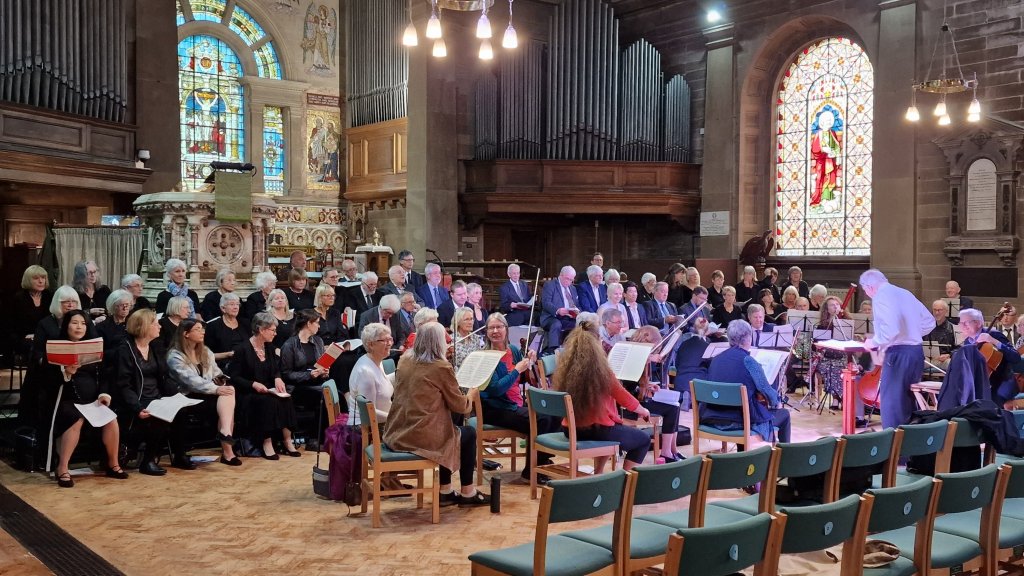
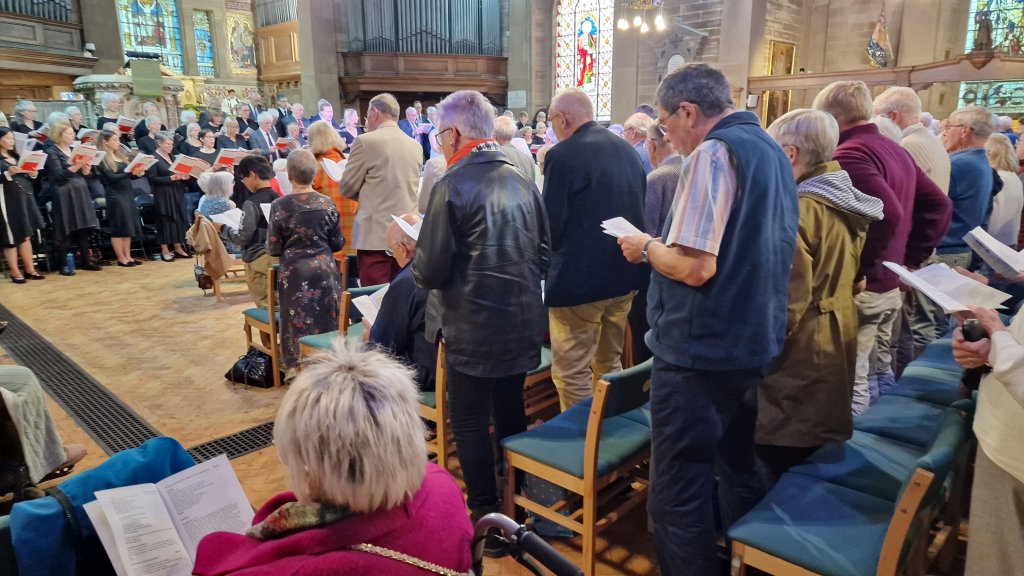
Earlier in the day, St. John’s was packed (downstairs at least) for the second of three Festival masses. Appropriately, the music chosen for this event was Mozart’s Coronation Mass, K317. For the hymns, the organ thundered in a more conventional manner with spectacular descants from the (sadly late) Richard Lloyd.
Right now, Monday 17th July, I am on a very late running Avanti West Coast service between Stockport and London Euston. Ye Gods! We are over 70 minutes late and snarled up in Birmingham. I was unaware of diversions and points failures! Arrival in Euston was around 85 minutes late. From what I gather from the on-train announcements, passengers were encouraged to submit claims for late-running compensation. It’s been a long time since I was on such a late running service in the U.K.
Eventually, I arrived at the Clarendon at Blackheath, my preferred place to get my head down in London. I needed a small amount of time to freshen up prior to making my way to Audrey’s 40th birthday celebrations at a rather smart wine bar style place, The Catford Bottle. I did enjoy this joyous celebration of pizza and various drinks. Although still having to obey the rules imposed owing to type 2 diabetes, I thought a slither of delicious chocolate cake wouldn’t do much damage. I think I got away with it!
At long last, I can regard this blog as complete and start again, even maybe tomorrow.
Many thanks for reading, David, 00.17 hrs, 18/7/23, the Clarendon Hotel, Blackheath
 Site Title
Leave a comment